Why Proactive Communication Is the Most Underrated Leadership Skill You Have
There is a moment most leaders recognize. Your supervisor appears in your doorway, pings you on Slack, or catches you before a meeting and asks, "Hey, how is that project going?"
It feels routine. But here's what it really signals: you've moved too slowly in communication.
That's not a criticism. It's a pattern that's incredibly common, and one that, once you see it, you can change in a way that transforms how people experience you as a leader.
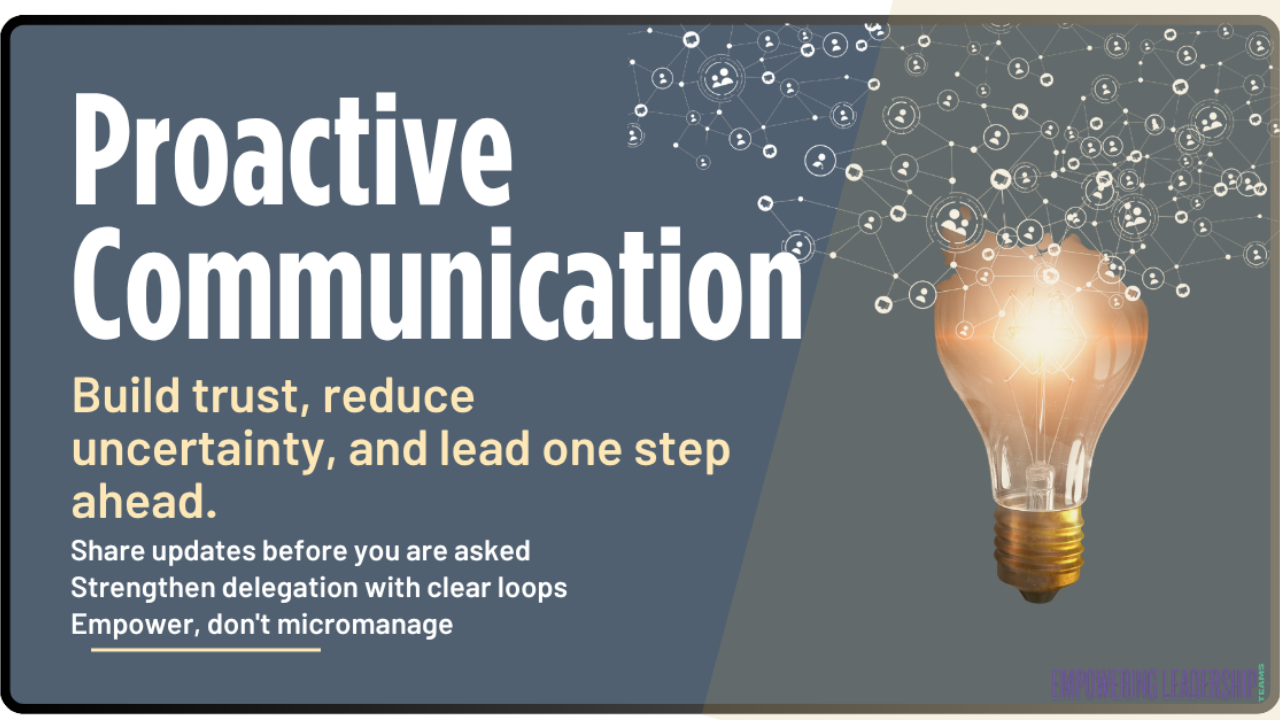
Proactive communication is the practice of sharing information before it's asked for. It means staying one step ahead, anticipating who needs an update, what they need to know, and when they need to know it, and then delivering that information without waiting for a prompt.
It sounds simple. But the impact is enormous.
Why Proactive Communication Builds Trust
When people have to ask for information, they start to wonder. They wonder about one project, and then they start wondering about all the projects. They wonder whether they can trust that projects are moving forward. The silence becomes louder than anything you could have said.
When proactive communication is flowing, something powerful happens: trust grows, confidence builds, and teamwork gets stronger.
This is especially true for your team. When you share information proactively to the people who report to you, you signal that they are partners in the work. They know that when there are updates, they will hear them. In uncertain times, that kind of predictability is worth more than almost any other management skill.
Setting Your Leadership Up for Success
Here's something business leaders don't often think about: your proactive updates don't just help you. They help your supervisor.
When you keep the leadership team informed, "Hey, here's where Phase One stands; we expect to have something to show you in two weeks", you give them the ability to answer their own supervisor's questions with confidence. They don't have to say "I'm not sure, let me check." They can say, "Yes, we heard from the team this afternoon. Here's where things stand."
You've set them up to be informed. That's empowering everyone to perform at their best, and they will notice.
The Delegation Connection
Proactive communication is deeply tied to how we delegate. One of the most common gaps in delegation is what happens at the end of a project: the open loop. Someone completes a task, but no one officially closes it. The supervisor is left wondering whether it's done, how it went, or what needs follow-up.
The fix is simple: build a completion loop into every delegation conversation. Before the work begins, ask and answer, "How will we know when this is complete?" Then make it someone's explicit responsibility to communicate that completion.
When this practice becomes normal, projects stop disappearing into silence. Supervisors stop wondering what happened to that report. Teams stop waiting to find out if their work landed well. Everyone operates with more clarity and partnership in achieving your business outcomes.
Proactive Communication Is Not Micromanaging
One of the most common objections I hear from leaders is this: "I don't want to share too much information or too many resources upfront, I don't want to seem like I'm micromanaging."
Let's clear this up.
Micromanaging is not about information-sharing. Micromanaging is watching without helping. It's hovering with distrust. It's waiting for someone to fail so you can step in and correct them. It comes from an intention to control, not to support.
Proactively sharing resources, context, and information comes from a completely different place. It sounds like this: "Mary, last year when I ran this project, here's what I learned. I want you to have that so you don't have to figure it out from scratch. Here are the tools that helped. Here's what I wish I'd known earlier."
One controls. The other empowers. Your team knows the difference. And almost no one is ever offended by being given more information to help them succeed.
How to Build a Proactive Communication Rhythm
Proactive communication works best when it's consistent rather than sporadic. Here's how to build a rhythm that works:
- Co-create with your supervisor: Have a direct conversation about what they most need to be updated on, how often, and where. Don't wait for them to set this up, own it yourself.
- Make it part of your daily planning: As you end your workday or begin the next, ask yourself: Who needs information from me today? What's changed that someone needs to know?
- Tailor updates to current priorities: What your team needs to hear about this quarter may be different from last quarter. Let your strategic focus shape what you communicate.
- Build in completion loops: Every time you delegate, agree upfront on how completion will be communicated. Make it a standard part of how you hand off work.
- Recalibrate regularly: Check in with your supervisor or team periodically. Is this rhythm working? Is this the right information? Is this the right frequency? Adjust as needed.
Start Today
You don't need a new system or a leadership retreat to begin. You need one small shift in habit: before someone has to ask, share. Proactive communication is an empowering skill for you and your organization.
Think of one project right now where your supervisor might be wondering how things are going. Send a brief update today, before they have to ask. Notice how it feels to do this with confidence. Notice how they respond.
That's what proactive communication looks like in practice. And over time, that habit, repeated consistently, at every level, becomes the foundation of the kind of trust that makes teams extraordinary.
Related Podcast: Proactivity in Communication: Building Trust and Efficiency
Related SubStack Post: The Communication Habit That Sets Leaders Apart: Why Staying One Step Ahead Changes Everything