Stop Letting Your Week Run You: A Practical Guide to Intentional Leadership

There is a pattern we see constantly in our coaching work: business leaders who are genuinely talented, highly capable, and deeply committed to their teams, who are also quietly drowning in their own week.
They're getting things done. They're showing up. From the outside, things look fine, even good. Yet on the inside, they'll tell you: it feels like survival through the week.
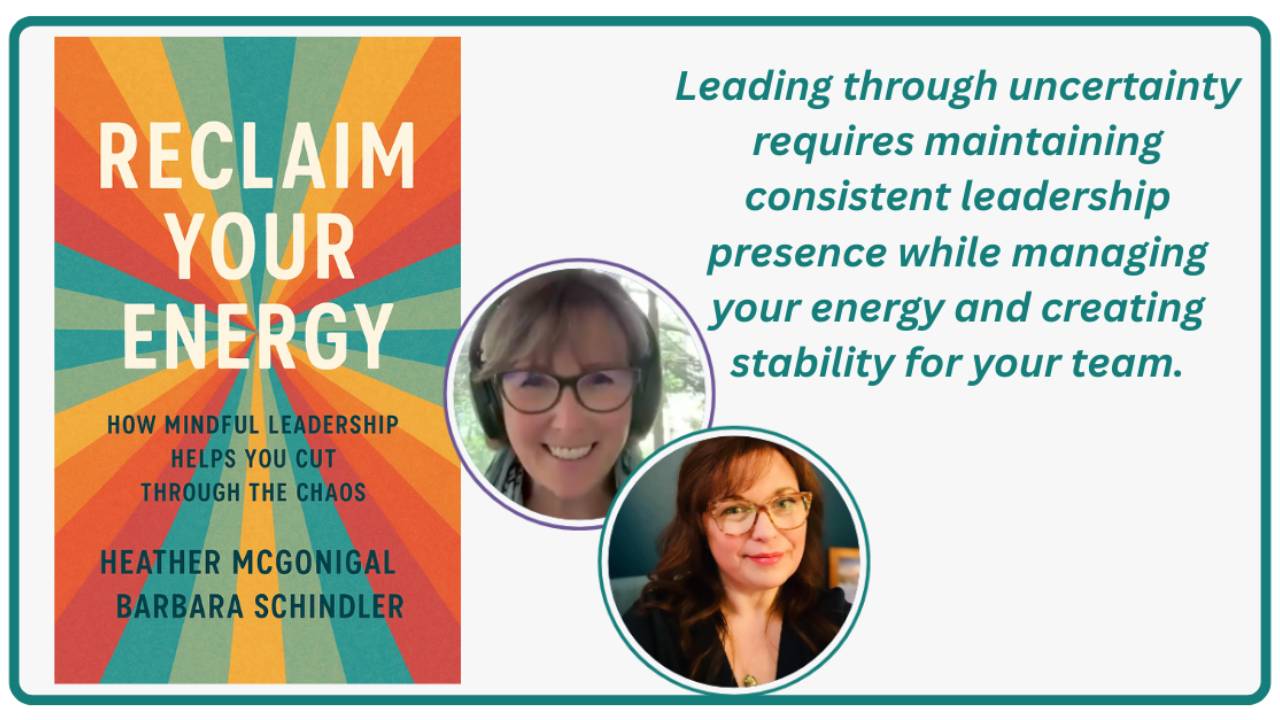
The gap between performing well and actually leading with intention, is exactly what Heather and I spent time exploring in a recent episode of Leadership With a Twist. And if any of this sounds familiar, keep reading, because there's a practical shift available to you that doesn't require more hours or more resources.
You Are a Limited Resource
This is the starting point, and we want to say it directly because a lot of leaders have been rewarded their whole careers for ignoring it: you are a human being, not a machine. There are 24 hours in a day. Of those, maybe eight are your working hours. Of those eight, four to five are the hours where your brain is genuinely at its best, high focus, high output, real deep-thinking capacity.
That's it. That's what you have to work with.
When you plan your week as if you have unlimited capacity, you've already set yourself up to lose. The volume of work in most entrepreneurial businesses exceeds what any one person can do well in a given week. Knowing that, the question isn't "how do I get it all done?" The question is "what's the best use of me?"
Those are very different questions. The first one creates frantic chaos. The second one creates strategy.
The High Performer Trap
Here's where it gets complex, especially for the high achievers in the room. High performers hold themselves to a high standard. That's a feature, not a bug. It's part of what got them here. But inside a fast-moving entrepreneurial business where resources are always stretched, there are going to be deliverables that require good enough, not your best.
And that is genuinely hard for a high achiever to accept.
You can see the level the work could reach. You know exactly what two more hours would do for that deliverable. But two more hours here means dropping something else over there, and that's not available either. So the good-enough version ships, and something quiet happens inside: a sense of falling short that's not actually accurate, but feels very real.
The coaching here is to get ahead of that feeling by redefining what success means in context. Not every project is the same. Some things deserve your full capacity. Others need to move and be at a level of done that is good enough for the purpose.
Part of leading yourself well is making that call clearly and intentionally, rather than letting all of it default to "I should do better."
Define Winning Before the Week Starts
This is the most practical shift we can offer: start your week by defining what winning looks like in your role for the next five days.
It sounds simple. It isn't always easy to do. When you sit down on Monday, before the emails pile up, before you're deep in someone else's urgency, and you ask yourself, "What does a successful week look like by Friday?" things are clarified.
Maybe winning looks like completing phase one of a major project and handing it to the next team. Maybe it looks like an important conversation you've been avoiding, finally happening. Maybe it looks like your inbox at zero, that report delivered, and one deep-focus session where you did your best thinking.
Define it. Write it down. Let it anchor your week.
This isn't about making a task list. It's about having an intentional focus in your work week that you're pulling yourself toward, instead of reacting and responding to what shows up.
Watch for the Inbox Trap
One behavioral pattern worth discussing: when work feels heavy or unclear, most of us naturally migrate toward easier tasks. The email inbox. The checkoff list. The low-stakes items we can complete and feel good about.
This isn't laziness. It's human. When we're overwhelmed or uncertain, we look for simple routine tasks where we feel accomplished.
When you notice yourself retreating to your inbox instead of tackling the harder work, that's usually a signal of overwhelm. There may be something about the bigger work that needs your attention, and the distraction of your inbox is telling you to slow down and check in with yourself before you continue.
It is certainly fine to clean up your inbox, yet checking in with yourself will support you to consider an intentional approach to address your bigger work into a pace that you can move forward in.
Celebrate the Milestones, Out Loud
One of the most underrated leadership tools in a busy organization is visible acknowledgment of progress.
When phase one of a project is complete, say so. Mark it. Acknowledge your team for it. The blur of busyness often swallows our wins whole, and people, high performers especially, can work incredibly hard for months and still feel like they're not achieving, because no one is pointing to the milestones along the way.
This is culture-building, not cheerleading. When you model the practice of defining done, celebrating progress, and moving consciously from one milestone to the next, your team learns to do it too. You shift the culture from "we'll celebrate when it's all finished" to "we recognize what's actually being accomplished along the way."
That shift matters more than most leaders realize.
The Change Starts With You
If you're leading a team right now and you feel frustrated by the culture, by the energy, by the blur of just surviving every week, this is the good news: you can make a shift to create positive change.
The shift starts with how you move through your own week. When you lead yourself with greater intention, you model it. When you define achievement and then claim those wins, your team sees that it's possible. When you check in with yourself daily and adjust consciously, you stop passing reactive energy through the channels of your team.
You don't need permission. You don't need everyone else to be on board. You need to shift with intention.
Original Content:
Leadership With a Twist Podcast: Lead With Purpose: Navigating Intention vs. Reaction