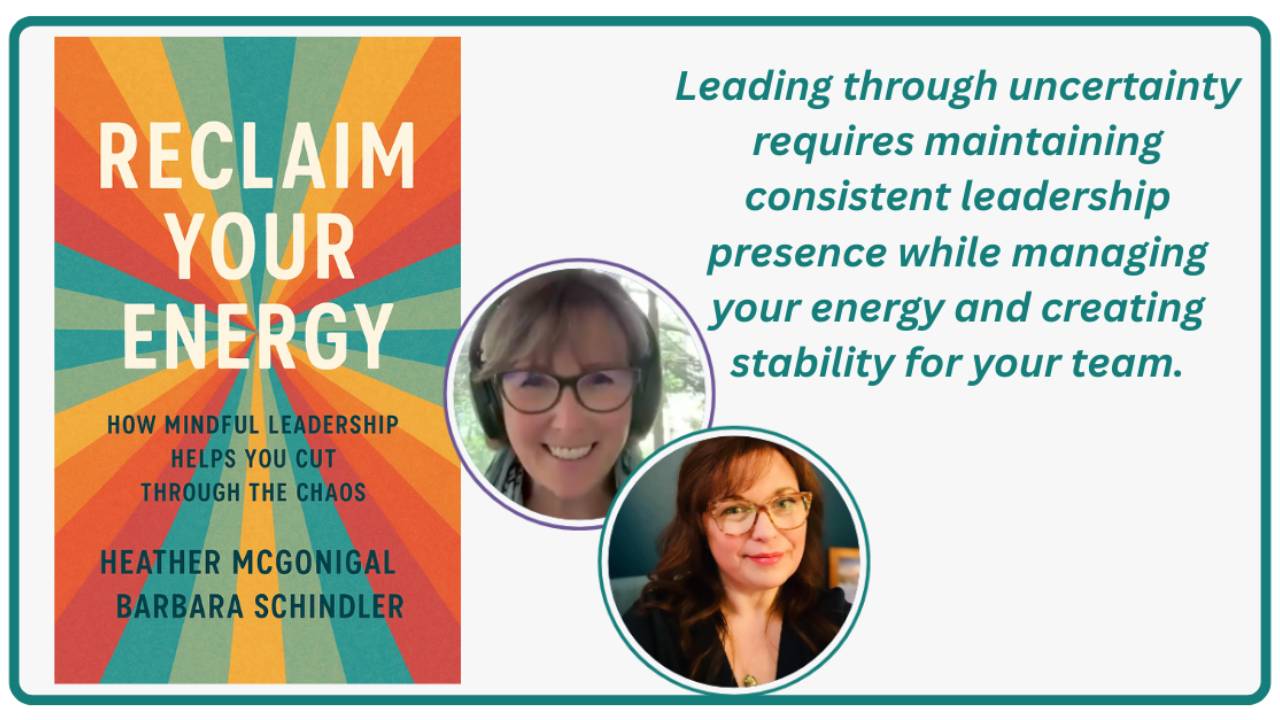
What Is Your Leadership Actually Demonstrating?
There is a question that does not get asked nearly enough in leadership development circles: not 'what are your values?' — but 'what are your actions demonstrating?'
Because here is the truth most of us already know: anyone can write a compelling set of leadership values. Anyone can articulate a vision of the kind of leader they want to be. The real test — the one that actually builds or erodes your reputation over time — happens in the unscripted moments. The moment after the launch falls short. The moment when a team member makes a significant mistake. The moment when it is 7 p.m. and you are still at your desk, telling your team to go home and rest.
Your team is not waiting for your next leadership speech. They are watching what you do.
The Everyday Architecture of Leadership Reputation
Leadership reputation is not built in grand gestures — it is built in micro-moments. The way you enter a meeting. Whether you acknowledge someone's hard work specifically or reflexively say 'good job.' Whether you are curious when something goes wrong or immediately scan for blame. These moments accumulate into a pattern, and that pattern is what your team experiences in your leadership.
One of the most powerful tools for leading intentionally is what I call a leadership anchor statement — a short, first-person articulation of the leader you are committed to being. Something like: 'I lead with calm clarity and genuine care for my team.' Before any significant interaction — a team meeting, a performance conversation, a high-stakes decision — you return to that statement. You ask yourself: is what I am about to do consistent with this? And over time, that practice builds the kind of leadership that people trust and want to work with.
Compassion: Starting With Yourself
One of the most counterintuitive insights in this work is that compassion for your team begins with compassion for yourself. If you are running on empty, operating in survival mode, and hammering yourself for every imperfection, you will not be able to model compassion for others. It will be a hollow performance — and your team will feel that gap.
Compassion does not mean lowering your standards. It means approaching your own growth — and your team's — with curiosity rather than judgment. When you notice a habitual pattern in your leadership that isn't serving you or your team, the response that actually changes things is not 'how did I let this go on so long?' — rather it is ‘interesting. How might I approach this differently?'
The same curiosity extends to mistakes. High-achieving teams are often the most intolerant of failure — which creates a deeply counterproductive dynamic where people protect themselves instead of taking smart risks. Creating genuine psychological safety around mistakes requires consistent, visible action over time. It means asking 'what did we learn?' before 'what happened?' It means modeling openly that you make mistakes too — and that making them does not define you.
Demonstrating Leadership Under Pressure
The higher the stakes, the harder it is to lead from your values — and the more your team is watching.
When the final day of a launch arrives and you are nowhere near your numbers, when an important client is unhappy, when the external environment is making everything harder — that is the moment that reveals your leadership character to your team. Not the motivational Monday morning message. Not the end-of-year celebration. The moment under pressure.
This is why having a high-stakes recovery plan is not optional for strong leaders. You need to know, in advance, how you take care of yourself during intense periods — and you need to model it visibly. Not because you want credit for self-care, but because your team is watching to see whether the values you espouse are real. A leader who says 'people are our most important asset' while operating in constant survival mode creates dissonance. A leader who takes a recovery walk and openly encourages their team to do the same sends a message that cannot be faked.
The Human Element: What Your Team Is Really Looking For
Working with leaders and organizations over the past decade, one pattern is strikingly consistent: the overwhelming majority of people in the workforce are not disengaged or lazy — they are deeply committed, often giving more of themselves than is sustainable. What they want in return is not perfection from their leaders. They want to see consistent evidence that their leader sees them as a whole human being.
That evidence shows up in small ways. In whether you acknowledge someone's effort specifically and sincerely. In whether you make space for questions and concerns. In whether your response to a difficult week communicates 'we are in this together' or 'perform or get out.' In whether what you do matches what you say.
The reputation you build as a leader is entirely within your control — regardless of your company's culture, your title, or your team's size.
You can begin right now. Ask yourself: what is my leadership demonstrating today? Then make one intentional choice to close the gap between your values and your actions. That choice, made consistently over time, is what leadership is made of.
Related Podcast:
Demonstrating Leadership: Actions Beyond Words
Related Articles:
The Science of Authentic Leadership: Why Integrity Builds Measurable Credibility
The Daily Leadership Habit That Changes Everything