You're Not a Machine: The Strategic Advantage of Whole Person Leadership
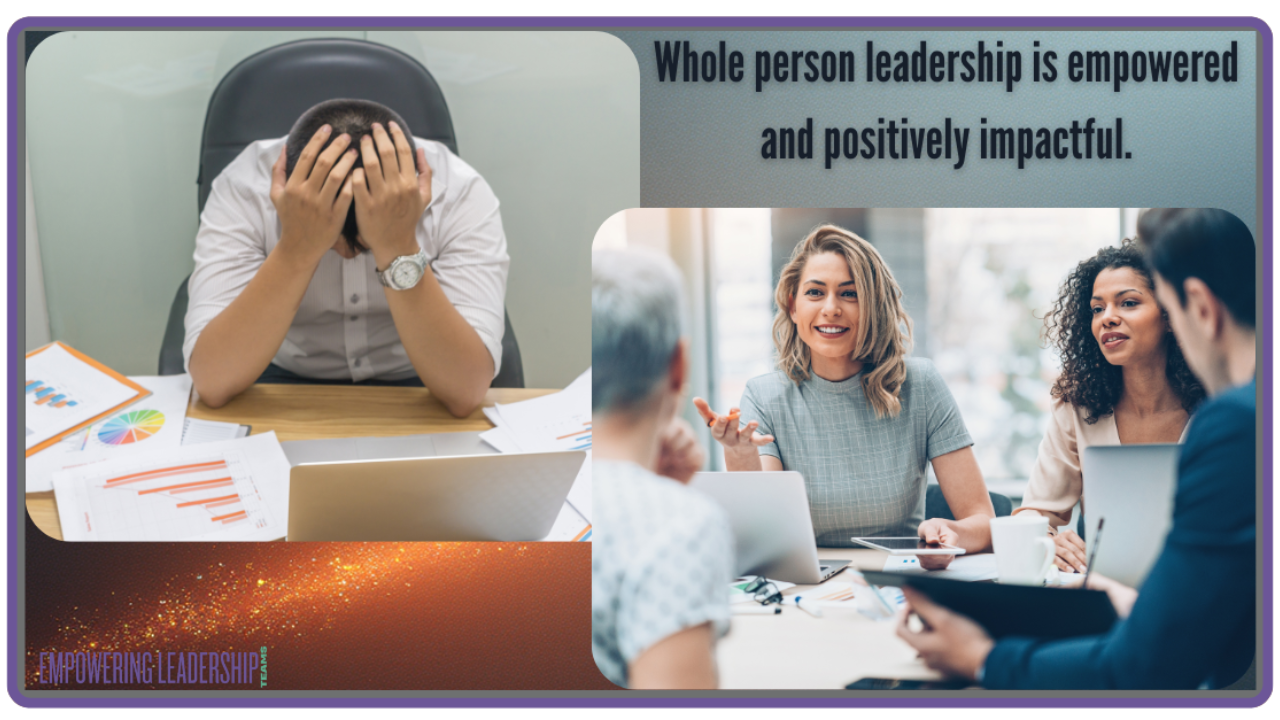
Your dog kept you up all night. You have a critical board presentation at 3 PM. Your calendar is packed with back-to-back meetings, and you can barely keep your eyes open.
What do you do?
If you're like most leaders, you push through. You grab extra coffee, power through the exhaustion, and hope for the best. After all, that's what professionals do, right?
Wrong.
There's a better way—one that actually produces superior results while preventing burnout. It's called whole person leadership, and it's transforming how effective leaders navigate the inevitable challenges of professional life.
What Is Whole Person Leadership?
Whole person leadership is the practice of bringing your complete, authentic self to work—including your emotions, energy levels, and life circumstances—while maintaining professional excellence. It's recognizing that you're not a machine with unlimited capacity, but a human being with constraints that deserve respect.
This isn't about oversharing personal details or using challenges as excuses. It's about honest self-assessment, strategic resource allocation, and creating work environments where everyone has permission to be human.
After coaching business leaders for over a decade, here's what we've learned: The most effective leaders don't compartmentalize their humanity away. They integrate it strategically into their leadership approach.
Why Traditional Leadership Models Fail
The old leadership paradigm demanded we leave our personal lives at the door. We were expected to perform at peak capacity regardless of sleep, stress, family situations, or emotional state. Any acknowledgment of limitation was seen as weakness.
But here's the problem: That model doesn't work.
When you pretend you're not human, several things happen:
- Decision quality declines – Exhausted brains make poorer choices, miss creative solutions, and struggle with complex thinking
- You model unsustainable practices – Your team learns they must also push through at all costs, creating a culture of burnout
- Psychological safety evaporates – When leaders never acknowledge struggle, team members hide their own challenges rather than addressing them strategically
- Delegation suffers – In a state of exhaustion and overwhelm the “I’ll just do it mode sets in” and delegation stops, and then you never create opportunities to develop others' capabilities nor build a thriving team achieving outcomes together
- Authentic leadership disappears – The disconnection between your inner experience and outer expression erodes trust and credibility
The whole person approach solves these problems by integrating self-awareness with strategic thinking.
The Self-Assessment Foundation
Whole person leadership starts with honest self-assessment. Before your workday begins, take five minutes to evaluate:
- What's my actual energy level today? (Be honest—not what you wish it was)
- What's happening in my life that might impact my work? (Sick family member? Stressful personal situation?)
- What extra support might I need? (More breaks? Different pacing? Calendar adjustments?)
- What are my absolute must-do priorities today?
- What do I need to be grounded in the moment to stay on course to show up as the best of me today?
This isn't self-indulgence—it's strategic intelligence gathering about your most important resource: you.
The Calendar Renegotiation Strategy
Here's where most leaders get stuck. Everything on your calendar feels urgent and immovable. But that's rarely true.
When you're facing constraints—whether exhaustion, unexpected challenges, or competing priorities—use this three-tier assessment:
Tier 1: Non-Negotiable These require your specific expertise, authority, or relationships. On our exhausted-leader day, this is the 3 PM board presentation. This stays.
Tier 2: High Value but Could Be Delegated Important work that could develop someone else's skills. These are opportunities for strategic delegation.
Tier 3: Reschedulable Solo project work, internal meetings with flexible participants, routine tasks. These can move.
Now here's the crucial step: Create space around your Tier 1 priorities by rescheduling Tier 3 items and potentially delegating Tier 2 items.
For our exhausted leader, this might mean:
- Rescheduling the morning project planning session
- Delegating the routine report review to a team member
- Blocking 30 minutes before the presentation for preparation and centering
- Taking a 10-minute walk mid-day for strategic thinking time
This isn't doing less work—it's optimizing when and how you do it.
Professional Transparency: Finding the Balance
Many leaders worry that acknowledging limitations appears unprofessional. But there's a significant difference between appropriate transparency and oversharing.
Oversharing: "I'm so exhausted because my dog was throwing up all night and I barely slept and I don't know how I'm going to get through this day..."
Professional transparency: "I had a challenging night and I'm at about 70% energy today. I've rescheduled some items to ensure I can give full attention to our board presentation."
Notice the difference? The second version:
- Names the constraint without excessive detail
- Demonstrates strategic thinking
- Shows you've taken action to manage the situation
- Maintains professional approach
This approach actually builds confidence in your leadership because it demonstrates self-awareness and proactive problem-solving.
The Delegation Advantage
Whole person leadership reveals delegation opportunities you might otherwise miss. When you ask "Am I the best resource for this task?" rather than "I’ve got to get this done!", everything changes.
You're not just a capable person—you're a limited resource with specific high-value contributions. Some things only you can do. Many things could develop someone else's capabilities while freeing your energy for strategic priorities.
This mindset shift transforms delegation from "I need to get this off my plate" to "I need to strategically allocate this valuable resource (me) for maximum impact."
Creating Team Psychological Safety
Here's the powerful ripple effect: When you model whole person leadership, you create permission for your entire team to operate the same way.
When team members see you:
- Honestly assess your capacity
- Renegotiate commitments strategically
- Take breaks that improve your thinking
- Delegate based on best resource allocation
- Maintain professionalism while acknowledging reality
They learn they can do the same.
This creates psychological safety—the foundation of high-performing teams. Team members don't hide struggles or push through at all costs. Instead, they proactively communicate, adjust strategically, and support each other's success.
The Bottom Line
Whole person leadership is empowered and positively impactful. It's strategically sophisticated.
When you honor your human constraints, you:
- Make better decisions
- Model sustainable practices
- Create psychological safety
- Delegate more effectively
- Bring your unique perspective fully to challenges
- Lead authentically without sacrificing professionalis
You're not a machine. Stop pretending you are.
Your team doesn't need you to be superhuman. They need you to be strategically human—aware of your limitations, proactive about your needs, and skilled at optimizing your most valuable resource: yourself.
Not only is this best for your wellbeing. It's better for business.
Related Reading:
Authentic Leadership Unleashed - Complimentary eGuide (no opt-in required)
Leading From Within: The Mindful Approach to Business Excellence
Finding Your Leadership Presence: Lessons from the Garden