The Self-Care Action Plan: How Entrepreneurial Leaders Can Prevent Burnout Before It Starts
If you're an entrepreneurial leader, you're probably really good at doing more with less. It's practically a requirement of the role. Limited resources, ambitious goals, and the constant pressure to perform create an environment where "hustle harder" becomes the default response to every challenge.
But here's the uncomfortable truth: you are your company's most limited resource.
Unlike technology or capital or even talent, you cannot scale yourself. You are a human being with finite energy, cognitive capacity, and emotional reserves. And when you treat yourself like a machine—overriding hunger, skipping sleep, scheduling back-to-back meetings without breaks—you're not demonstrating dedication. You're depleting the very resource that makes everything else possible: your capacity for strategic thinking, creative problem-solving, and effective leadership.
The Problem with Reactive Self-Care
Most leaders only think about self-care after they've already hit the wall. You push through for weeks or months, and then you're forced to take time off because you're sick, or you make a costly error in judgment, or you snap at someone on your team and damage a valuable relationship.
This reactive approach doesn't work for two reasons. First, by the time you recognize you're burnt out, the damage is already done—to your health, your relationships, your reputation, and your business results. Second, recovery from severe burnout takes far longer than prevention would have.
What if instead of waiting until you're depleted, you proactively built self-care into your leadership approach?
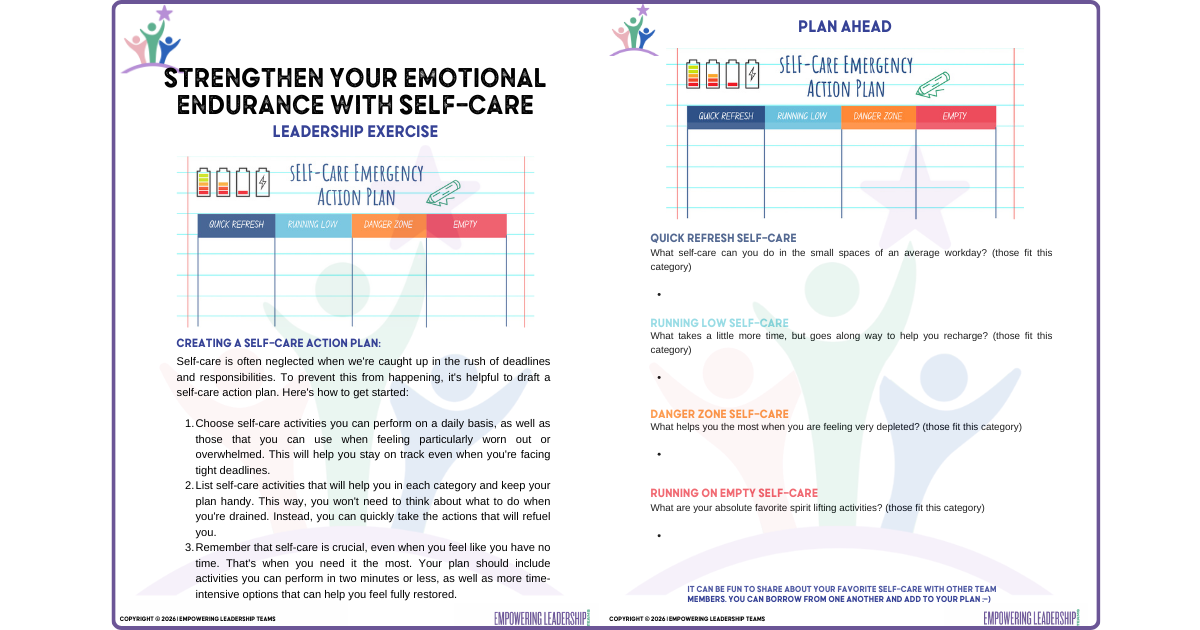
Introducing the Self-Care Action Plan
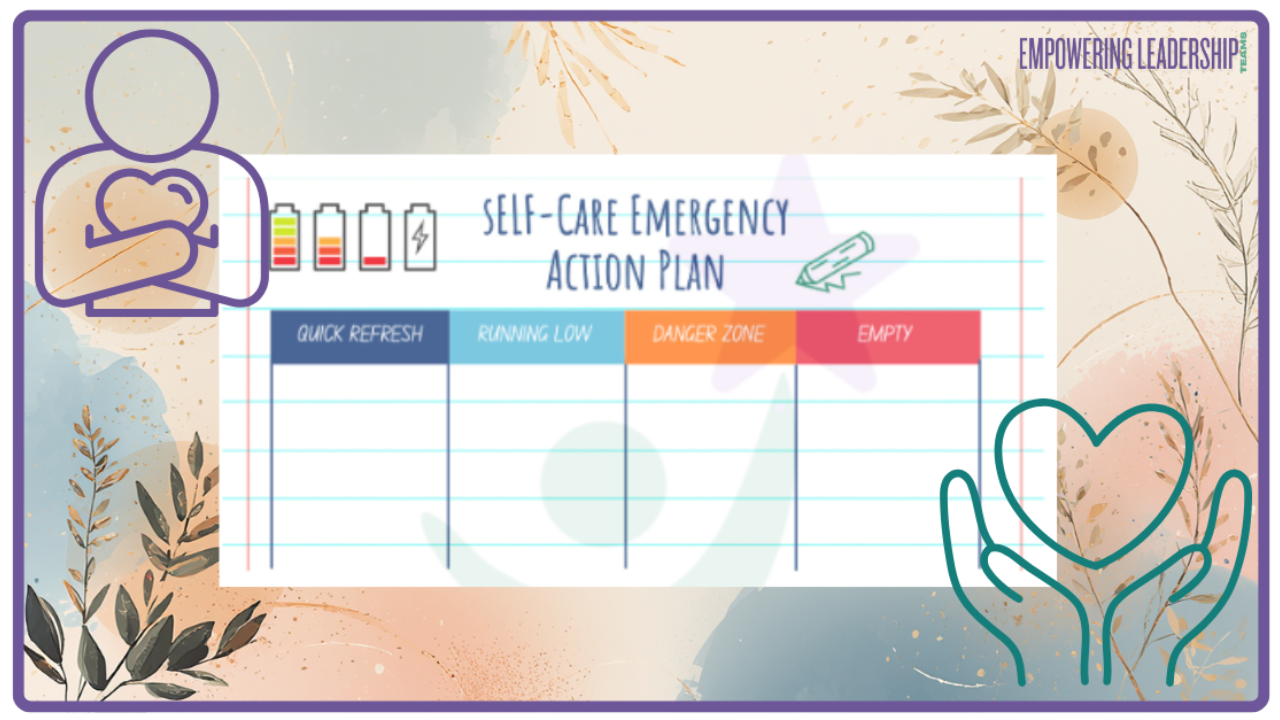
The Self-Care Action Plan is a framework we developed while working with entrepreneurial leaders who were consistently burning out. What we discovered was that these talented, driven leaders weren't failing because they lacked commitment or capability—they were failing because they had no system for sustaining themselves through the inevitable intensity of entrepreneurial leadership.
The framework works by categorizing self-care strategies based on two key variables: your current energy level and the time you have available.
Here's how it breaks down:
Quick Refresh (5 minutes or less): These are micro-practices you can deploy throughout your day to shift your state and create mental transitions. Examples include making a cup of tea mindfully, taking three deep breaths before meetings, doing a quick stretch sequence at your desk, or stepping outside for fresh air.
Running Low (15-30 minutes): These are moderate restoration activities for when you notice you're starting to fade but haven't hit crisis mode yet. This might include taking a real lunch break away from your desk, going for a walk, doing a brief workout, or engaging in a task that's less draining for you.
Danger Zone (60+ minutes): These are deeper recovery practices for when you're seriously depleted. This could be an afternoon off, a massage, extended physical activity, time in nature, or whatever genuinely restores you at a profound level.
The key is having these strategies identified and ready BEFORE you need them. When you're already depleted, you don't have the mental energy to figure out what would help. But when you've created your plan in advance, restoration becomes as simple as consulting your list and choosing an option that fits your current situation.
The Five-Minute Practice That Changes Everything
One of my favorite five-minute rituals that beautifully illustrates the power of intentional pauses is making myself a chai tea latte in my "Super Mom" cup every afternoon.
It's not about the tea—though I do enjoy it. It's about what happens during those five minutes:
- The sequential steps of making the tea engages my focus in a calming, repetitive process
- My state physically shifts as I move away from my desk and tend to the tea making
- The warm beverage triggers my parasympathetic nervous system
- In this way I have practiced honoring my need for a pause in real-time
When I return to my work, I am more present, more focused, and better equipped to handle whatever comes next. That five-minute investment creates hours of improved performance.
This is what strategic self-care looks like. Not grand gestures or elaborate wellness routines—simple, sustainable practices that fit into your daily life.
Building Your Plan: Start Here
Ready to create your own Self-Care Action Plan? Here's how to start:
- Conduct a self-assessment. When do you typically start feeling depleted? What are your earliest warning signs? For some people, it's irritability. For others, it's forgetting to eat or losing the ability to prioritize.
- Identify what genuinely restores you. Not what you think "should" work or what works for others—what actually shifts your state and replenishes your energy? Be honest. Maybe it's movement for you, or stillness, or social connection, or solitude.
- Categorize by time available. For each restoration activity you've identified, note how long it takes. Build a menu of options so you have choices whether you have five minutes or fifty.
- Prepare for high-stress seasons. If you know you have a product launch, quarter-end push, or other intense period coming up, create a specific protocol for that time. This might mean keeping protein bars on your desk, blocking practical bedtimes in your calendar, or arranging backup support.
- Create environmental support. Make self-care the path of least resistance. Keep water visible on your desk. Stock your workspace with nutritious snacks. Set phone reminders for breaks. Turn off notifications during focused work time.
The Truth About Sustainable Success
The most successful entrepreneurial leaders I work with aren't the ones who work the longest hours or sacrifice the most. They're the ones who have figured out how to sustain their energy, clarity, and presence over the long term.
They understand that showing up depleted doesn't serve anyone—not their team, not their customers, not their investors, and certainly not themselves. They've learned that protecting their capacity isn't selfish; it's strategic.
Your self-care directly impacts your company's results. When you're rested and restored, you make better decisions. You communicate more effectively. You solve problems more creatively. You lead with greater presence and patience.
Conversely, when you're running on empty, every aspect of your leadership suffers—even if you're too depleted to notice it.
The Choice Is Yours
Nobody is coming to save you from burnout. Your calendar won't magically clear itself. Your inbox won't stop filling. The demands on your time and energy won't decrease on their own.
But you can make a different choice. You can decide that sustainable success matters more than short-term heroics. You can build a Self-Care Action Plan that ensures you're able to bring your best thinking, your clearest communication, and your most creative problem-solving to the work that matters.
Start small. Choose one practice from each category. Build it into your routine for a week and notice what changes. Then add another.
You are your company's most valuable asset. Start treating yourself that way.
Ready to create your personalized Self-Care Action Plan? Download the free template and start building your framework for sustainable leadership success today. And if you'd like support customizing it to your unique role and challenges, schedule a complimentary consultation—because sometimes the best self-care is asking for help.
Download a Complimentary PDF of the Self-Care Action Guide
No Opt-in Required—Because We Trust You'll Come Back When You're Ready